
Describe what a stranger would notice in three seconds, in a fixed order: age, skin, hair (length, texture, colour, cut), eyes and brows, one or two distinctive marks, build. Use plain, concrete words, leave out clothing and mood, and never name or hint at a real person. Two sentences are enough.
A template
[Woman / man] in [her / his] [early / mid / late age], [skin tone], [hair length, texture, colour and cut], [eyes or brows if distinctive], [one or two marks: scar, glasses, beard, freckles, earring], [build].
Three real descriptions, and what they did
These are the exact descriptions behind Dittoshot's examples.
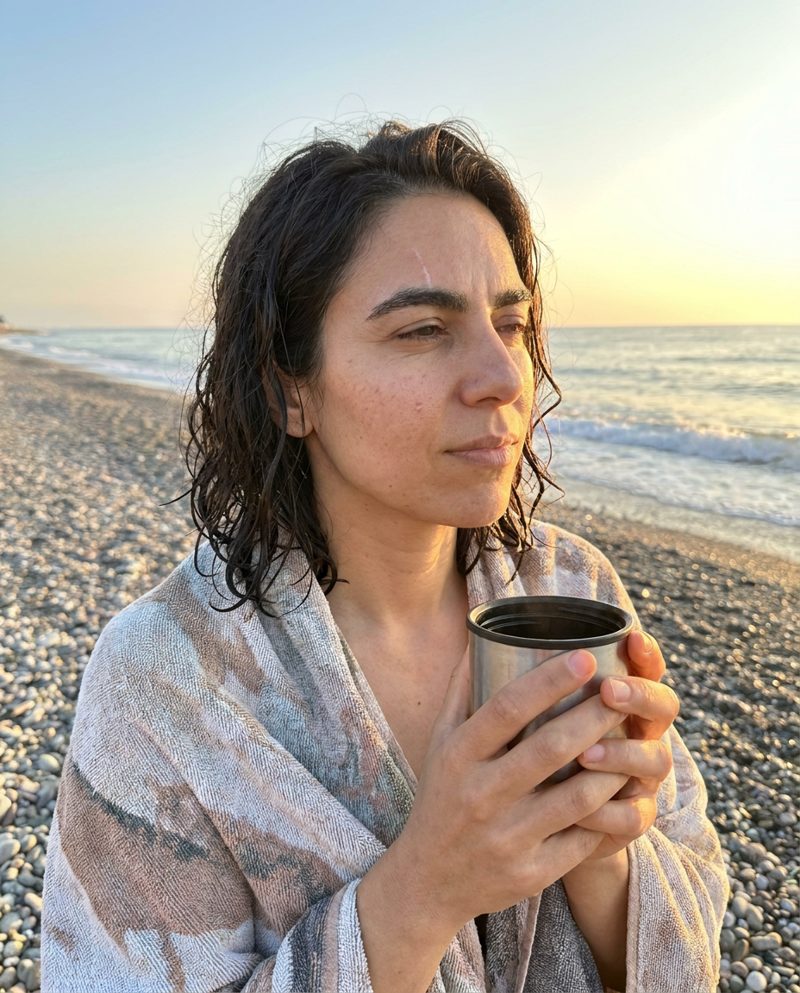
Mira: “Woman in her early 30s, olive skin, dark brown shoulder-length wavy hair, thick eyebrows, small scar above the left eyebrow, slim athletic build”
Tomás: “Man in his late 40s, light brown skin, short salt-and-pepper hair receding at the temples, trimmed grey beard, rectangular glasses, broad shoulders, slightly heavy build”
Aiko: “Woman in her mid 20s, East Asian, fair skin with light freckles, straight black hair in a blunt bob with bangs, narrow face, small silver hoop in her right ear, petite build”
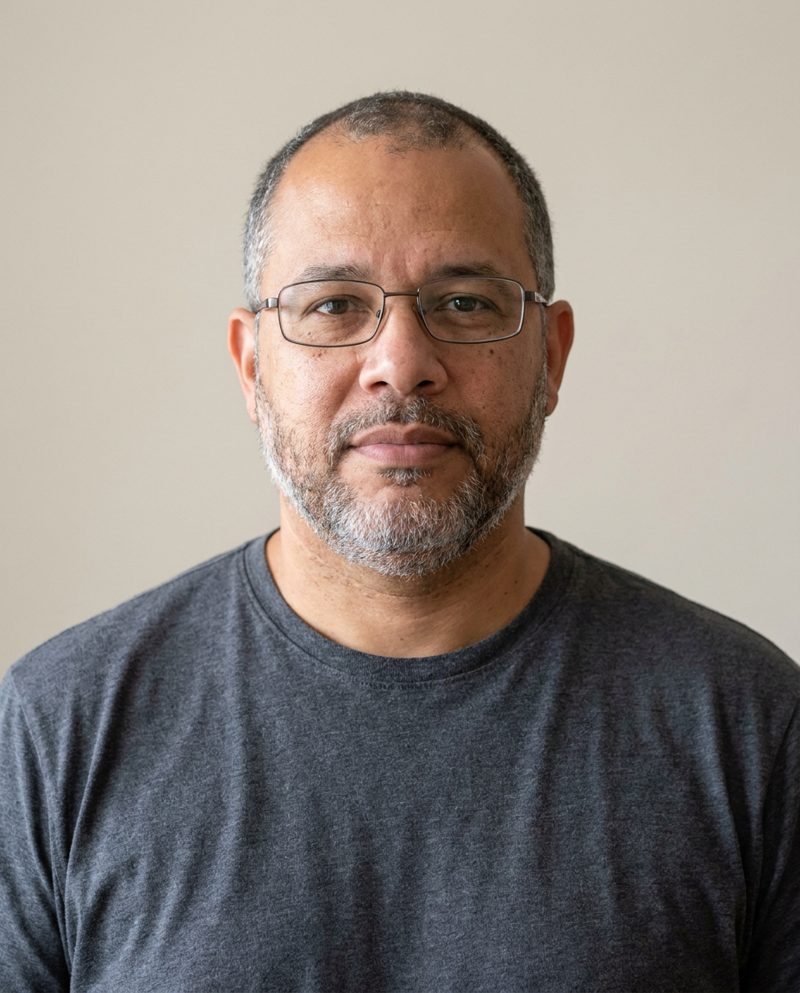
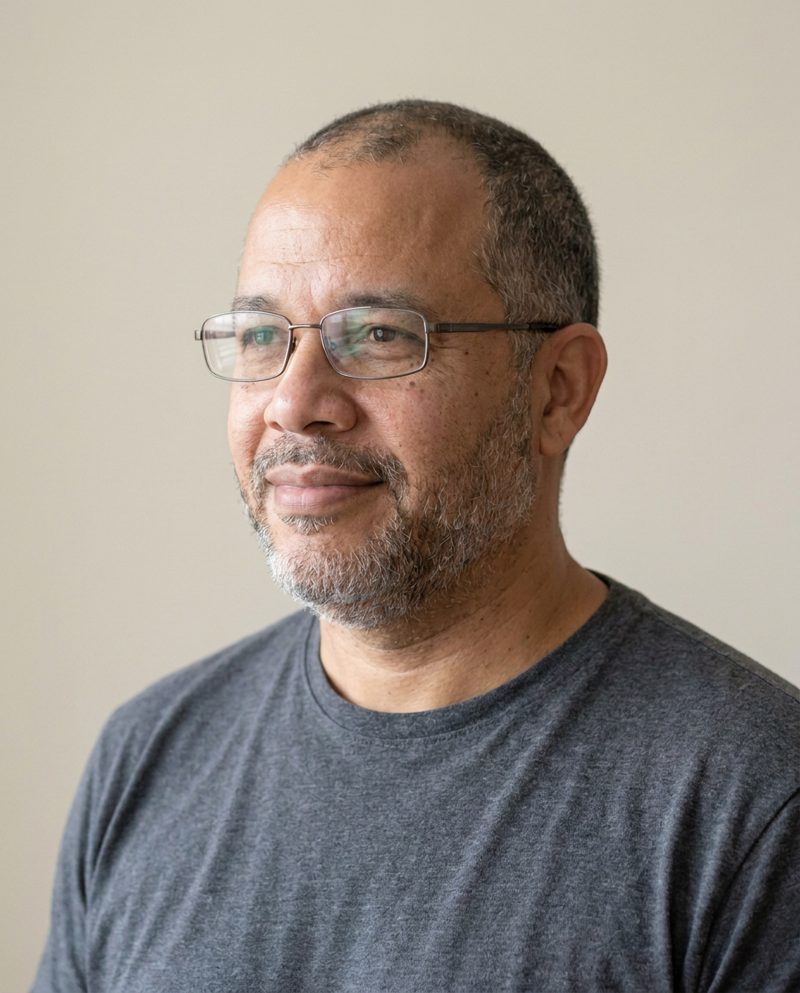
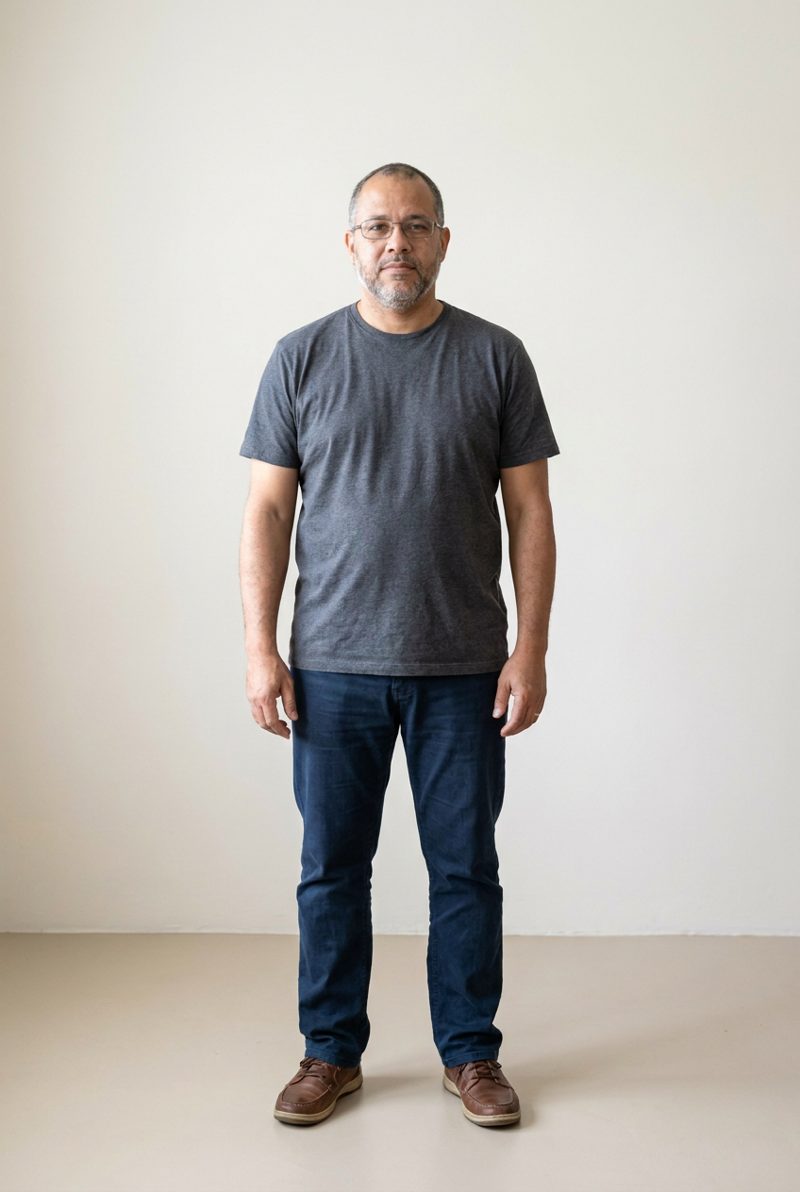
Rules that make a description hold
- Give an age range, not a number. "Early 30s" or "late 40s" sets the face's age without fighting the model over a single year.
- Name the cut, not just the colour. "Dark hair" fits anyone; "straight black hair in a blunt bob with bangs" is an outline the model has to reproduce. Aiko's bob is the most stable feature across her photos.
- Add one or two anchors. Glasses, a beard, a scar or an earring give both the model and the identity check something concrete to match. More than two and they start competing.
- Prefer anchors that survive distance. A small scar reads in a portrait and disappears in a full-body shot; glasses and a haircut don't.
- Be careful with left and right. In both of our examples that named a side, the reference sheet put the mark on the picture's side instead of the person's. Check the sheet and treat what it shows as canon.
- Skip beauty words. "Beautiful", "perfect skin" and "model looks" pull every face towards the same generic one, the opposite of a recognisable person.
- Leave clothes and mood for the scenes. The sheet uses plain clothes so the face is the only thing it fixes; wardrobe then follows each scene.
- No real people. "Looks like" a celebrity or anyone you know is out: it's how deepfakes start, and Dittoshot's terms forbid describing a real, identifiable person.
The bio is a separate line
Appearance fixes the face; a one-line bio gives the person a life to photograph. "Ceramicist in Lisbon. Cycles everywhere, swims in the sea before work" is what turned into Mira at the potter's wheel, by her bike and on the beach at sunrise. In Dittoshot, leave the scene empty and it writes one from the bio.


Try it: a new person costs 11 tokens and your first one is free.